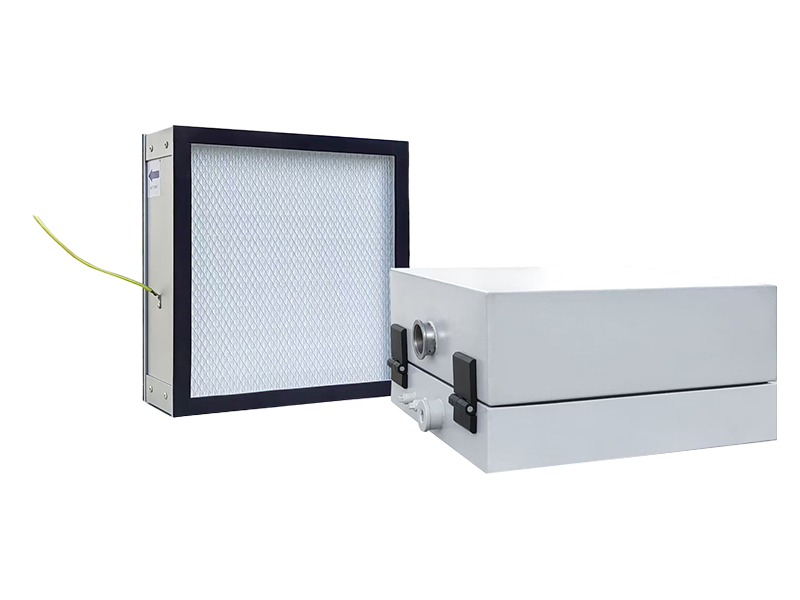
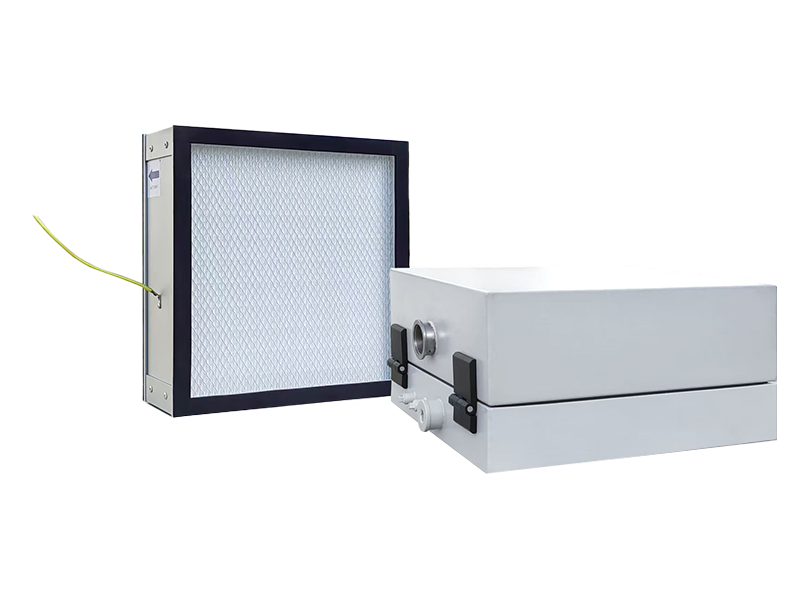
Metal 3D Printing Exhaust Filters for Fume & Particle Control
High-Efficiency Exhaust Filtration for Metal Additive Manufacturing
Metal 3D printing exhaust filters are designed to remove fine metal fumes, dust and particulate contaminants from exhaust air generated during additive manufacturing processes.
During SLM, DMLS and LPBF metal 3D printing, high-energy laser processing can generate submicron metal fumes, fine powder particles and metal oxides. These contaminants can accumulate in the build chamber and enter the exhaust stream during printing or chamber purging.
Without effective exhaust filtration, airborne metal particles may contaminate the surrounding workspace and increase occupational exposure risks.
Our metal 3D printing exhaust filters combine multi-stage particulate filtration and HEPA filtration to provide reliable exhaust air treatment for additive manufacturing facilities, laboratories, universities and production workshops.
They are suitable for applications where a dedicated centralized exhaust system is unavailable or where additional filtration is required at the equipment exhaust point.
Why Is Exhaust Filtration Important for Metal 3D Printing?
Metal additive manufacturing generates airborne contaminants that differ significantly from conventional polymer 3D printing.
Depending on the material and process, exhaust air may contain:
Typical printing materials include:
Titanium alloys
Aluminum alloys
Stainless steel
Nickel-based alloys
Cobalt-chrome alloys
Maraging steel
Effective exhaust filtration helps:
Reduce airborne metal particulate contamination
Protect operators and surrounding work areas
Maintain cleaner laboratory and workshop environments
Reduce contamination of ventilation systems
Support safer powder handling and printing operations
Multi-Stage Filtration for Metal Printing Exhaust
Our exhaust filtration systems use a multi-stage filtration configuration to progressively remove particles of different sizes before air reaches the final HEPA stage.
Stage 1 – Primary Filtration
Captures larger metal powder and particulate contaminants, reducing the particle loading on downstream filters.
Stage 2 – Fine Particle Filtration
Removes smaller particles and metal fumes while providing additional protection for the final HEPA filter.
Stage 3 – H13 HEPA Filtration
The high-efficiency HEPA stage is designed according to EN 1822 classification requirements and provides a filtration efficiency of ≥99.95% at MPPS for H13-grade filters.
The actual filtration performance and outlet concentration depend on filter configuration, airflow, contaminant characteristics and operating conditions.
Key Features & Benefits
Compact Stand-Alone Exhaust Filtration
The system can be configured as an independent exhaust filtration unit requiring:
Its compact configuration makes it suitable for:
Individual metal 3D printers
Small additive manufacturing laboratories
Universities and research centers
Small production workshops
Optional casters allow the filtration unit to be repositioned between compatible machines when required.
High-Efficiency HEPA Filtration
The final HEPA stage provides high-efficiency removal of fine airborne particles.
H13 HEPA filtration is suitable for applications where strict control of fine particulate emissions is required.
For applications involving hazardous powders or specific regulatory requirements, the complete filtration system should be selected according to the material Safety Data Sheet (SDS), local regulations and site ventilation requirements.
Safety-Oriented Filtration Design
Metal powders can present specific fire and explosion risks depending on material properties, particle size and concentration.
Depending on the application, the system can be configured with:
Flame-retardant filter media
Conductive or antistatic components
Grounded metal housing
Spark arrestor or spark pre-separation
Differential pressure monitoring
High-temperature filter configurations
For reactive materials such as titanium and aluminum powders, filtration system selection should be based on the specific powder characteristics and process conditions.
Flexible Installation for Decentralized Applications
Unlike large centralized extraction systems, compact exhaust filtration units can be installed close to individual machines.
This provides greater flexibility for:
New printer installations
Laboratory environments
Pilot production
University research facilities
Small-batch additive manufacturing
Multiple units can also be integrated into larger workshop ventilation strategies where required.
Typical Applications
Metal 3D Printing Exhaust Filtration
Suitable for exhaust air generated by:
During chamber opening and maintenance, residual airborne powder and fumes may be discharged from the build chamber.
A dedicated exhaust filtration unit can provide an additional filtration stage during chamber purging and post-printing operations.
Powder Handling & Sieving
Fine metal powder generated during:
Powder transfer
Powder recovery
Powder sieving
Powder recycling
can become airborne.
Local exhaust filtration helps control particulate emissions at the source.
Laser Processing & Welding
The same filtration technology can be adapted for selected applications involving:
Laser welding
Laser cutting
Metal processing
Small welding stations
System configuration should be selected according to the temperature, particle loading and spark characteristics of the specific process.
Technical Specifications
| Parameter | Specification |
| Product Type | Metal 3D Printing Exhaust Filter |
| Filtration Configuration | Primary + Fine + HEPA |
| Final Filter | H13 HEPA |
| HEPA Efficiency | ≥99.95% at MPPS |
| Filter Media | Synthetic Fiber / Glass Fiber / HEPA Media |
| Housing | Powder-Coated Steel / Stainless Steel |
| Safety Options | Antistatic / Flame-Retardant / Spark Arrestor |
| Installation | Stand-Alone / Local Exhaust |
| Differential Pressure Monitoring | Optional |
| Caster Wheels | Optional |
| High-Temperature Version | Available |
| Custom Airflow | Available |
Actual filtration efficiency, pressure drop, service life and outlet particle concentration depend on filter configuration, airflow, contaminant characteristics and operating conditions
Stand-Alone or Centralized Exhaust Filtration?
The appropriate exhaust strategy depends on the number of printers, production volume, contaminant characteristics and building ventilation system.
Stand-Alone Exhaust Filtration
Recommended for:
Advantages include:
Centralized Exhaust System
Recommended for:
Large production facilities
Multiple printers operating simultaneously
High exhaust volumes
Dedicated manufacturing workshops
A centralized exhaust system can be combined with terminal HEPA filtration to provide additional particulate control.
Why Choose Our Metal 3D Printing Exhaust Filters?
We provide filtration solutions specifically developed for metal additive manufacturing applications.
Key advantages include:
✔ Multi-stage particulate filtration
✔ H13 HEPA final filtration
✔ Compact stand-alone configurations
✔ Antistatic and flame-retardant options
✔ Spark protection options
✔ High-temperature configurations
✔ Custom airflow and dimensions
✔ OEM and equipment-compatible designs
Our solutions are suitable for EOS, SLM Solutions, Concept Laser, Renishaw, Farsoon, E-Plus 3D and other metal additive manufacturing platforms, subject to equipment-specific requirements.
Frequently Asked Questions
Can a metal 3D printing exhaust filter replace a centralized ventilation system?
For small-scale applications, a stand-alone filtration unit may provide localized exhaust treatment without requiring major modifications to the building ventilation system.
For large production facilities or multiple printers operating simultaneously, a centralized extraction system may be more appropriate.
Whether filtered air can be discharged indoors depends on the specific material, contaminant concentration, local regulations and site ventilation design.
Can the filter handle titanium and aluminum powder?
Yes, filtration systems can be configured for titanium, aluminum and other metal powders.
However, these materials can present combustible or reactive dust hazards. The filtration system should therefore incorporate appropriate antistatic, grounding, spark protection and fire-safety measures based on the specific application.
Can the exhaust filter handle high-temperature exhaust?
Standard configurations can be designed for moderate exhaust temperatures. For applications with elevated exhaust temperatures, such as certain EBM processes, high-temperature filter media and heat-resistant components can be specified.
The exhaust temperature should be confirmed before selecting the filter configuration.
How often should the exhaust filter be replaced?
There is no universal replacement interval.
Filter replacement should be based primarily on:
Differential pressure monitoring provides a practical method for determining filter loading and replacement requirements.
Can you customize the exhaust filtration system?
Yes. We can customize:
Airflow capacity
Filter dimensions
Filter stages
HEPA grade
Housing configuration
Antistatic design
Spark protection
High-temperature components
Equipment connection interfaces
This allows the filtration unit to be matched to individual metal 3D printers and specific workshop conditions.